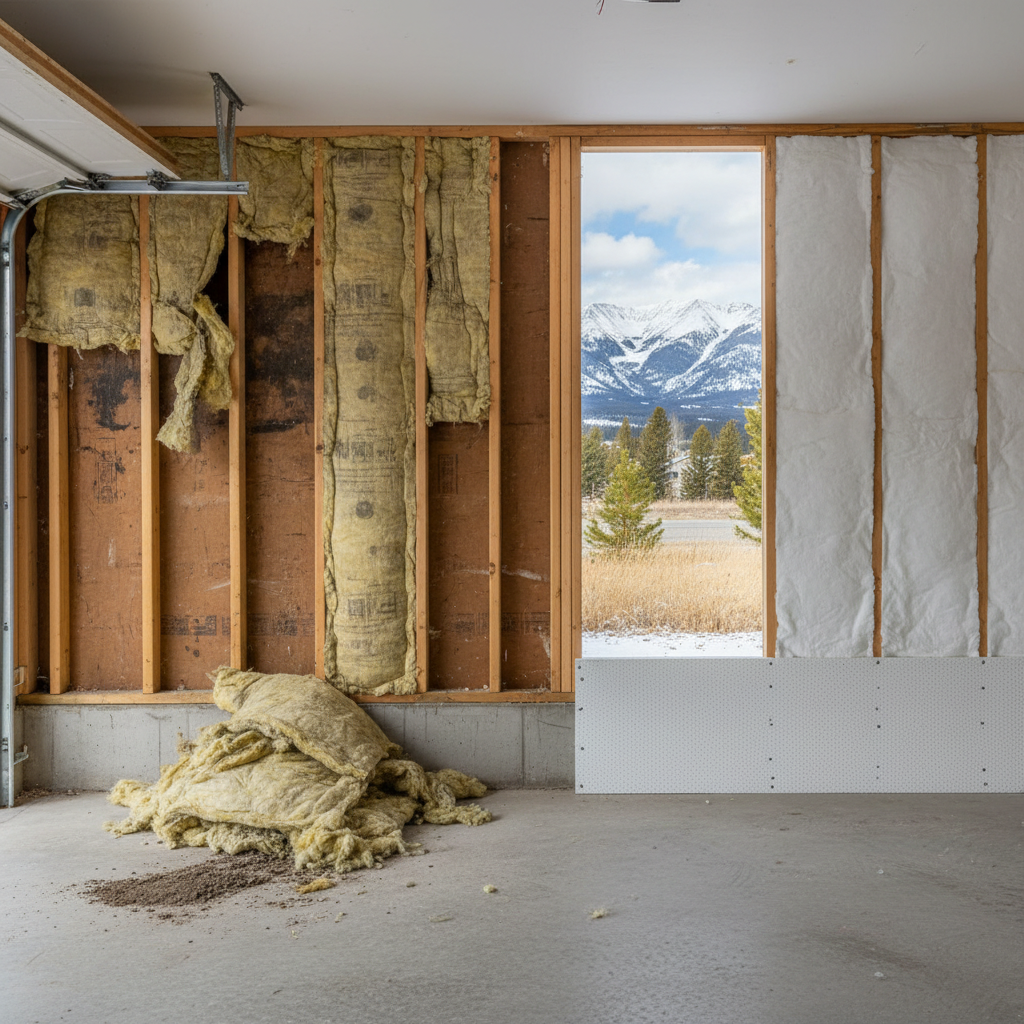
Alright, let's talk garages. Up here in Big Sky, your garage isn't just a place to park your truck; it's often a workshop, a storage area for gear, or even a buffer zone for your whole house. So, keeping it insulated properly? That's not a luxury, it's a necessity. When folks call me up at Genesis Insulation Company asking about insulating their garage, it usually boils down to two main options: traditional batt insulation or spray foam. Both have their place, but for our neck of the woods, one usually pulls ahead.
Batt Insulation: The Familiar Face
You know batt insulation. It's that pink, yellow, or white fluffy stuff, usually fiberglass or mineral wool, that comes in rolls or pre-cut pieces. It's been around forever, and for good reason: it's generally the most budget-friendly option upfront.
Cost & Installation
Price-wise, batt insulation is usually cheaper per square foot to buy. Installation can be a DIY job if you're handy and have the time, but it needs to be done right. If there are gaps, or if it's compressed, you lose a lot of its R-value (that's the insulation's resistance to heat flow, by the way). You'll typically see R-13 or R-19 in garage walls, and maybe R-30 or R-38 in the ceiling, depending on whether there's an attic space above.
Durability & Maintenance
Once it's in, batt insulation doesn't really need maintenance. But here's the kicker for Big Sky: moisture is a huge enemy. If fiberglass batts get wet, they lose their insulating power and can stay wet, leading to mold or mildew issues. And let's be honest, garages can get damp, especially with snowmelt dripping off vehicles or if you're hosing things down. Pests can also nest in it, which is another headache you don't need.
Appearance
You're usually covering batt insulation with drywall or some other finish, so its appearance isn't a big deal. If you leave it exposed, it's not exactly a looker.
Spray Foam: The Modern Solution
Now, spray foam. This is the stuff I really push for garages around here, especially with our extreme temperature swings and heavy snow loads. It comes in two main types: open-cell and closed-cell. For garages, especially those exposed to the elements or with unconditioned spaces above, closed-cell is usually the way to go.
Cost & Installation
Yes, spray foam is more expensive upfront. There's no getting around that. It requires specialized equipment and trained professionals to install it correctly. You can't just pick this up at the hardware store and do it yourself. But you're paying for a superior product and a professional installation that will pay dividends down the road.
Durability & Maintenance
This is where spray foam shines, especially closed-cell. It creates an air seal, meaning it stops drafts dead in their tracks. That's huge for a garage door, which is often a major source of air leakage. It won't sag over time, it's not a food source for pests, and closed-cell foam actually adds structural rigidity to your walls. Plus, it's hydrophobic, so it resists water absorption. That's a game-changer when you've got a foot of snow melting off your truck in January. I've seen plenty of garages in the Meadow Village area that are just too drafty, and spray foam makes a world of difference.
Appearance
Once it's sprayed, it expands and cures into a rigid, often yellowish or off-white material. It can be trimmed flat, and like batts, it's usually covered by drywall. But even if it's exposed, it looks a lot cleaner and more finished than exposed batts.
My Recommendation for Big Sky Garages
Look, if you're on a super tight budget and your garage is just for parking and nothing else, batt insulation can work, especially if you're diligent about air sealing every crack and crevice. But for most Big Sky homeowners, especially if you're using your garage for anything beyond just parking, or if it's attached to your living space, I'm going to steer you towards spray foam insulation every single time.
The upfront cost is higher, I won't lie. But the long-term benefits? They're huge. You'll get better energy efficiency, a more comfortable space, superior moisture resistance, and a much more durable insulation system that won't degrade over time. It's a better investment for our climate. You'll feel the difference, and your energy bills will too. Give us a call at Genesis Insulation Company if you want to talk specifics for your place.